

Introduction
A Hydraulic Backpack-type House Elevator is a compact residential vertical transportation solution designed for multi-level houses, villas, duplexes, self-built homes, and residential renovation projects. It combines hydraulic lifting technology with a backpack-type structural configuration to provide efficient vertical transportation while allowing greater flexibility in architectural design.
Modern houses are increasingly being designed with multiple floors, split-level spaces, rooftop areas, balconies, garages, and independent living zones. Although stairs remain a traditional method of connecting floors, they may not always provide the most convenient solution for elderly residents, children, people with limited mobility, or families that frequently transport heavy household items between floors.
A house elevator can improve accessibility and convenience while also making better use of the vertical space within a property. However, conventional passenger elevators can require substantial construction work, including a dedicated shaft, pit, overhead clearance, or machine room. A Hydraulic Backpack-type House Elevator can provide a more flexible alternative for certain residential layouts because its lifting structure can be arranged primarily along one side of the cabin.
The system can be customized according to the number of floors, travel height, rated load, cabin dimensions, door configuration, building structure, and installation environment. Depending on the project, it may be suitable for indoor or outdoor applications.
For homeowners, architects, builders, elevator distributors, and project contractors, understanding the structure, specifications, installation requirements, safety functions, and maintenance requirements of a hydraulic backpack-type house elevator is essential for selecting an appropriate system.
What Is a Hydraulic Backpack-type House Elevator?
A Hydraulic Backpack-type House Elevator is a Residential Elevator that uses a hydraulic drive mechanism to raise and lower the elevator cabin.
The term "backpack-type" refers to the structural arrangement in which the guide and lifting components are positioned primarily on one side of the elevator cabin. Instead of relying entirely on a conventional central elevator shaft arrangement, this configuration can allow the elevator structure to work alongside an existing wall or other suitable structural support.
The hydraulic system typically consists of a hydraulic power unit, motor, pump, oil reservoir, valves, hydraulic cylinder, pipelines, and control components.
When the elevator receives an upward command, the hydraulic pump generates pressure and sends hydraulic fluid to the cylinder. The cylinder extends and raises the cabin. For downward movement, hydraulic fluid is released through a controlled valve system so that the cabin descends at a regulated speed.
A complete house elevator system may contain:
Elevator cabin
Hydraulic cylinder
Hydraulic power unit
Guide rails
Structural support
Control cabinet
Landing doors
Cabin doors
Door interlocks
Limit switches
Position sensors
Emergency stop
Overload protection
Anti-fall protection
Emergency lowering system
Alarm system
Backup power system
Lighting
Communication equipment
The exact configuration should be engineered according to the project requirements and applicable local elevator regulations.
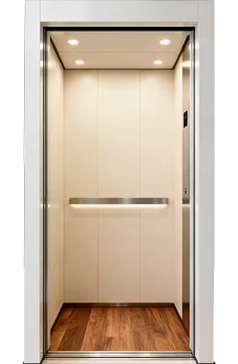
Hydraulic Backpack-type House Elevator Parameters
The technical specifications of a hydraulic backpack-type house elevator can be customized according to the building.
Product Type | Hydraulic Backpack-type House Elevator |
Application | Houses, Villas, Duplexes, Residential Buildings |
Drive Type | Hydraulic |
Installation | Indoor or Outdoor |
Typical Capacity | Approximately 250–450 kg |
Passenger Capacity | Approximately 2–5 People |
Floors | Commonly 2–5 Floors |
Travel Height | Customized |
Cabin Size | Customized |
Door Type | Manual or Automatic |
Door Arrangement | Single or Multiple Access |
Guide System | Vertical Guide Rails |
Structural Configuration | Backpack-type Side-mounted Arrangement |
Control System | Electronic Control System |
Power Supply | According to Local Requirements |
Cabin Materials | Stainless Steel, Glass, Aluminum, Steel or Customized |
Safety System | Multiple Safety Protection Functions |
Installation | New Construction or Existing House |
Customization | Available According to Project |
The above values are general reference ranges rather than universal specifications. Actual parameters should be confirmed by the manufacturer after reviewing the building layout and technical requirements.
Main Components of a Hydraulic Backpack-type House Elevator
Understanding the main components makes it easier to evaluate product quality and compare different residential elevator solutions.
The hydraulic power unit provides the pressure required to move the elevator.
It normally includes:
Hydraulic pump
Electric motor
Oil tank
Control valves
Hydraulic fittings
Pressure-related components
The power unit should be selected based on the rated load, travel distance, lifting speed, cylinder configuration, operating frequency, and electrical supply.
A properly matched hydraulic power unit can help achieve stable and controlled elevator movement.
The hydraulic cylinder converts hydraulic pressure into mechanical movement.
The cylinder specification depends on the elevator's load capacity, travel height, lifting configuration, and structural arrangement.
Cylinder seals and hydraulic connections should be inspected regularly because leakage can affect system performance.
Guide rails provide vertical guidance for the elevator cabin.
They help control cabin movement and maintain the required alignment during operation.
Accurate installation and regular inspection are important for smooth elevator movement.
The cabin is the passenger compartment.
For residential applications, cabin dimensions can be customized according to available space and intended use.
Common cabin materials include stainless steel, glass, aluminum, coated steel, or combinations of several materials.
The control cabinet coordinates elevator operation.
It can receive signals from:
Floor buttons
Cabin buttons
Door sensors
Limit switches
Position sensors
Safety devices
Emergency systems
The controller processes these signals and controls the hydraulic system and elevator movement.
Landing doors protect openings at each floor and help prevent passengers from entering the elevator opening when the cabin is not present.
Depending on the design, the system may use manual or automatic doors.
Safety equipment can include:
Door interlocks
Emergency stop
Overload protection
Anti-fall protection
Hydraulic safety valves
Upper limit protection
Lower limit protection
Emergency lowering
Alarm system
Backup power
Electrical protection
The final safety configuration should comply with the relevant regulations and standards in the installation country.
How Does a Hydraulic Backpack-type House Elevator Work?
The working principle is based on hydraulic pressure.
When a passenger selects a floor, the control system first checks relevant safety conditions. If the doors are closed and the safety circuit is normal, the hydraulic power unit starts.
The pump moves hydraulic fluid into the cylinder. Pressure causes the cylinder to extend and move the elevator cabin upward.
When the cabin reaches the selected floor, position sensors and control signals command the system to stop.
For downward movement, hydraulic fluid is released through the valve system at a controlled rate. The cabin then moves downward until it reaches the selected landing.
A simplified operating sequence is:
Floor Selection → Safety Check → Hydraulic Activation → Cabin Movement → Position Detection → Controlled Stop
This process allows the elevator to provide controlled vertical transportation between residential floors.
Key Features of Hydraulic Backpack-type House Elevator
The backpack-type arrangement places major lifting and guide components along one side of the cabin. This can provide useful flexibility for projects with limited space.
Hydraulic technology provides strong lifting capability and can be configured for different residential load and travel requirements.
The system can be designed for various residential buildings, including:
Private houses
Villas
Duplexes
Townhouses
Self-built houses
Renovated homes
Multi-level residences
Depending on the design, the elevator can be installed inside or outside the building.
Outdoor installation requires suitable weather-resistant materials and proper protection of electrical and hydraulic components.
The cabin can be customized according to the building layout.
Possible customization includes:
Width
Depth
Height
Door opening
Interior finish
Lighting
Flooring
Handrails
Control panel
Different house layouts may require different entrance directions.
The elevator can potentially be configured for different landing arrangements depending on the structural design.
The control system can coordinate doors, sensors, limit switches, emergency systems, and hydraulic components to improve operating safety.
Advantages of Hydraulic Backpack-type House Elevator
Space is one of the biggest challenges in home elevator projects.
A backpack-type structure can position the lifting components along one side of the cabin, which may provide additional flexibility compared with some conventional elevator layouts.
Existing homes were often designed without elevator shafts.
A customized hydraulic house elevator can sometimes be integrated into an existing building after a professional structural assessment.
For some projects, outdoor installation can reduce the need to modify interior rooms.
Villas often contain several floors and large vertical distances.
A residential hydraulic elevator can connect bedrooms, living areas, garages, balconies, terraces, and other spaces.
A house elevator can make vertical movement easier for elderly family members, children, and people who have difficulty using stairs.
It can also help users transport:
Groceries
Luggage
Furniture
Household equipment
Laundry
Other heavy items
Residential buildings rarely have identical layouts.
A custom elevator can be designed according to the available space, floor height, capacity, cabin dimensions, door locations, and appearance requirements.
The ability to consider both indoor and outdoor configurations provides additional flexibility during the planning stage.
Glass panels, stainless steel surfaces, aluminum components, customized lighting, and modern cabin finishes can allow the elevator to become an integrated part of the building design.
Applications of Hydraulic Backpack-type House Elevator
A hydraulic backpack-type house elevator can connect multiple levels in a villa.
Typical destinations may include:
Basement
Garage
Ground floor
Bedrooms
Living areas
Rooftop
Terrace
The final number of stops depends on the project design.
Duplex homes can benefit from a compact vertical transportation system that connects separate living levels.
Self-built homes often have customized floor plans.
A flexible elevator design can be adapted to the available space and building structure.
Older homes may not have space for a traditional elevator shaft.
An outdoor elevator installed against an external wall can sometimes provide a practical renovation solution.
A home elevator may connect balconies on multiple floors.
For outdoor balcony installations, attention should be given to weather protection, drainage, structural anchoring, and safe landing access.
Multi-floor houses can become more difficult to navigate as residents age.
A home elevator can provide easier access between frequently used floors.
Compact residential properties may require a space-efficient lifting system.
A customized backpack-type configuration can be considered where installation space is restricted.
How to Design a Hydraulic Backpack-type House Elevator
Good elevator design begins with a detailed assessment of the building.
Determine how many floors need to be connected.
Measure the vertical distance between the lowest and highest stops.
Measure:
Width
Depth
Height
Door opening
Overhead clearance
Floor area
Structural support locations
Determine the expected passenger load and whether the elevator will regularly transport household goods.
The cabin should provide enough usable space without unnecessarily increasing the installation footprint.
Door orientation and landing position should match the architectural layout.
Determine whether the elevator will be:
Indoors
Outdoors
Beside a staircase
Along an exterior wall
Near a balcony
Adjacent to a garage
Outdoor projects require additional consideration of:
Rain
Humidity
Temperature
Corrosion
Drainage
Sunlight
Electrical protection
Hydraulic Backpack-type House Elevator Installation
Professional installation is recommended for residential elevator systems.
Before installation, technicians inspect the building and record:
Floor dimensions
Floor heights
Structural conditions
Installation location
Power supply
Door positions
Hydraulic unit location
The required foundation, support frame, wall reinforcement, landing structure, and other construction work should be completed according to the approved design.
Guide rails and structural supports are installed and aligned vertically.
Incorrect alignment can affect ride quality and component wear.
The cylinder, pump unit, valves, pipelines, and hydraulic connections are installed.
All hydraulic connections should be checked for proper sealing.
The cabin and related mechanical components are assembled and connected to the lifting structure.
Landing doors and cabin doors are installed and adjusted.
Door interlocks and sensors must function correctly.
The control cabinet, floor buttons, cabin controls, sensors, switches, lighting, alarm, and safety circuits are connected.
The elevator should be tested before normal operation.
Testing can include:
Empty operation
Rated-load operation
Door operation
Emergency stop
Limit switches
Emergency lowering
Overload protection
Leveling
Safety circuits
Usage Instructions
Correct operation helps maintain reliable performance.
Check that the landing area is clear.
Do not use the elevator if there is visible damage, hydraulic leakage, abnormal noise, or a control-system warning.
Passengers should remain inside the cabin.
Do not exceed the rated capacity.
Do not jump or deliberately move violently inside the cabin.
Do not force the doors.
Children should use the elevator under appropriate supervision.
Remain calm and use the alarm or emergency communication system if available.
Do not attempt to climb out of the elevator cabin.
Do not manually open doors unless the emergency procedure specifically allows it and qualified personnel are directing the process.
Maintenance of Hydraulic Backpack-type House Elevator
Regular maintenance helps reduce unexpected failures.
Technicians should inspect:
Hydraulic oil level
Hydraulic hoses
Cylinder seals
Valves
Fittings
Pump
Motor
Any significant leakage should be investigated promptly.
Guide rails should be checked for:
Alignment
Fastening
Wear
Contamination
Inspect:
Door rollers
Door locks
Door sensors
Interlocks
Opening and closing operation
Check:
Control cabinet
Wiring
Terminals
Sensors
Limit switches
Buttons
Safety circuits
Safety systems should be tested according to the manufacturer's maintenance schedule and applicable regulations.
Common Problems With Hydraulic Backpack-type House Elevators
Possible causes include:
Power failure
Door not closed
Emergency stop activated
Safety circuit interruption
Controller fault
Check basic conditions and contact qualified technicians if the problem persists.
Possible causes may include hydraulic pressure issues, oil problems, pump performance, control settings, or excessive load.
A professional inspection is recommended.
Potential causes include worn seals, damaged hoses, loose fittings, or component aging.
Do not continue normal operation if leakage is significant.
Check for obstructions and visible damage.
If the door sensor or interlock has a problem, qualified personnel should repair it.
Abnormal sounds may indicate:
Mechanical wear
Loose components
Guide rail problems
Hydraulic issues
Motor or pump problems
The source should be identified before continued operation.
Possible causes include sensor adjustment, hydraulic control, mechanical alignment, or control-system problems.
Professional commissioning may be necessary.
Hydraulic Backpack-type House Elevator Cost Factors
The cost of a house elevator depends on the complete project rather than the elevator unit alone.
Major cost factors include:
Elevator capacity
Number of floors
Travel height
Cabin size
Hydraulic system
Structural support
Door type
Cabin materials
Control system
Safety equipment
Indoor or outdoor installation
Building modifications
Transportation
Installation
Electrical work
Customization
Maintenance requirements
A supplier usually needs detailed project information before preparing an accurate quotation.
Useful information includes:
Number of floors
Floor-to-floor height
Total travel
Required capacity
Cabin dimensions
Door configuration
Installation location
Available space
Building type
Preferred materials
Hydraulic Backpack-type House Elevator for Outdoor Installation
Outdoor installation can be useful when interior space is insufficient.
However, outdoor projects require additional engineering considerations.
The elevator should use suitable materials and protective measures for the local climate.
Metal structures may require appropriate surface treatment or corrosion-resistant materials.
Rainwater should not accumulate around the elevator base or hydraulic components.
Outdoor electrical equipment should have appropriate protection against moisture and environmental exposure.
The elevator structure must be securely connected to the building or independent support structure according to the engineering design.
Customization Options
A major benefit of residential elevator systems is design flexibility.
The rated capacity can be selected according to the intended passenger and household transportation requirements.
Possible cabin options include:
Compact cabin
Standard residential cabin
Glass cabin
Stainless steel cabin
Customized decorative cabin
Depending on the design, doors can be configured according to the landing layout.
Common choices include:
Stainless steel
Glass
Aluminum
Painted steel
Composite materials
The system may include:
Floor control buttons
Cabin controls
Emergency alarm
Intercom
Backup power
Remote monitoring
Fault indication
Safety Considerations
Safety should always be considered before purchasing, installing, or operating a house elevator.
The elevator should be designed and installed according to the applicable local requirements.
Important safety functions may include:
Door interlocks
Emergency stop
Overload protection
Anti-fall protection
Hydraulic safety valves
Limit switches
Emergency lowering
Backup power
Alarm
Emergency communication
Safety devices should never be bypassed or modified without authorization.
For outdoor elevators, environmental protection is also an important part of the safety design.
How to Choose a Hydraulic Backpack-type House Elevator Manufacturer
Selecting a supplier should involve more than comparing quotations.
Consider the manufacturer's:
Can the supplier provide customized elevator designs based on actual building conditions?
Check production quality, component selection, quality control, and factory testing procedures.
Determine whether installation guidance, technical documentation, commissioning support, or professional installation services are available.
For unusual house layouts, customization can be important.
Ask about spare parts, maintenance guidance, warranty conditions, troubleshooting support, and technical service.
A professional supplier should be able to provide appropriate technical documents, installation instructions, maintenance information, and product specifications.
Frequently Asked Questions
It is a residential elevator using hydraulic lifting technology with a backpack-type side-mounted structural configuration.
Yes. It can be designed for private houses, villas, duplexes, and other multi-level residential buildings.
It may be possible depending on the building structure, available space, travel height, and local requirements. A professional site assessment is necessary.
Yes. Outdoor configurations can be designed with suitable structural, electrical, weatherproofing, corrosion protection, and drainage measures.
The number of floors depends on the specific design, travel height, hydraulic system, and local requirements. Residential systems can be configured for multiple floors.
The capacity depends on cabin dimensions and engineering design. Compact residential configurations can commonly be designed for approximately 2–5 passengers.
Yes. Cabin dimensions can be adjusted according to the available installation space and required capacity.
It may be possible if the staircase-side location provides sufficient space and suitable structural support.
The exact structural requirements depend on the design. A backpack-type configuration can provide greater flexibility for some residential projects, but proper structural support and safety protection are still necessary.
Hydraulic technology can be used for residential vertical transportation when properly engineered, installed, and maintained.
Yes. Hydraulic components, doors, guide rails, electrical systems, sensors, and safety devices require periodic inspection.
Common potential causes include damaged seals, loose fittings, aging hoses, or component wear.
Yes. A residential elevator can provide convenient vertical transportation and reduce dependence on stairs.
It can be designed to transport passengers and suitable household loads within its rated capacity.
Yes. Stainless steel is a common choice for residential elevator cabins because of its durability and appearance.
Depending on the product configuration, automatic doors may be available.
Suppliers generally need the number of floors, floor height, total travel, capacity, cabin size, door arrangement, installation location, available space, and preferred materials.
Installation time varies according to the elevator configuration, building preparation, structural work, number of floors, site conditions, and project complexity.
Yes. Villa elevator projects often require customization of cabin dimensions, doors, materials, capacity, travel height, and structural arrangement.
Start by defining the number of floors, travel height, available space, required capacity, cabin dimensions, installation location, safety requirements, and local compliance requirements. Then compare suitable manufacturers and obtain a project-specific technical proposal.
Conclusion
A Hydraulic Backpack-type House Elevator is a flexible residential elevator solution for houses, villas, duplexes, self-built homes, and renovation projects. Its combination of hydraulic lifting technology and backpack-type structural design can provide useful flexibility where conventional elevator arrangements may not fit the building layout.
The most important factors when selecting a house elevator include rated capacity, travel height, cabin dimensions, structural support, hydraulic components, door configuration, safety equipment, installation environment, maintenance requirements, and regulatory compliance.
For new construction, the elevator can be incorporated into the architectural design from the beginning. For existing homes, a detailed site survey can help determine whether an indoor or outdoor configuration is appropriate.
A successful residential elevator project requires cooperation between the homeowner, architect, structural engineer, contractor, and elevator supplier. With suitable engineering, professional installation, regular maintenance, and correct operation, a Hydraulic Backpack-type House Elevator can provide convenient and accessible vertical transportation for modern multi-level homes.
Situs web ini menggunakan cookie untuk memastikan Anda mendapatkan pengalaman terbaik di situs web kami.
 English
 ไทย
ไทย Tiếng Việt
 Filipino



 Telepon