

Introduction
Traction Gantry Home Elevator System Price is one of the most important considerations when planning a Residential Elevator for a villa, private house, duplex, self-built home, or low-rise residential building. However, the purchase price of a home elevator is rarely determined by the elevator car alone. The final project budget can include the traction system, gantry structure, elevator car, controller, doors, safety components, shaft or enclosure, structural work, electrical installation, transportation, commissioning, inspection, and long-term maintenance.
A traction gantry home elevator combines a traction drive system with a gantry-style structural arrangement. The traction machine moves the elevator car through a traction mechanism, while the gantry, guide rails, counterweight, controller, doors, and safety devices work together to provide controlled vertical transportation.
For homeowners and B2B buyers, comparing quotations only by the headline price can be misleading. One supplier may quote only the elevator equipment, while another quotation may include installation and part of the structural work. Current 2026 home elevator pricing references demonstrate this difference clearly: published planning ranges can vary from around US$20,000 for simpler residential systems to more than US$100,000 for highly customized or complex projects.
Therefore, the most useful way to evaluate a Traction Gantry Home Elevator System Price is to understand exactly what is included, which technical specifications affect the cost, what building preparation is required, and what expenses may occur after delivery.
What Is a Traction Gantry Home Elevator System?
A Traction Gantry Home Elevator System is a residential elevator that uses traction technology and a gantry-style support structure.
The traction machine provides the lifting force. Depending on the system design, ropes or belts transfer the traction force between the machine, elevator car, and counterweight. Guide rails maintain the vertical movement of the car, while the controller coordinates travel, door operation, leveling, and safety functions.
The gantry structure provides the supporting framework required by the elevator configuration. This type of system can be engineered for different residential floor plans and customized according to the available space.
A complete system may include:
Gantry frame
Traction machine
Elevator car
Counterweight
Guide rails
Traction ropes or belts
Controller
Control cabinet
Landing doors
Car door
Car operating panel
Landing call buttons
Door interlocks
Limit switches
Safety devices
Emergency alarm
Emergency lighting
Electrical components
Optional backup power
Optional communication system
The actual configuration depends on the manufacturer, project requirements, building structure, destination-market regulations, and selected options.
Traction Gantry Home Elevator System Price: What Does It Include?
The phrase “home elevator price” can refer to several different cost levels.
An equipment-only quotation may include the elevator system supplied by the manufacturer but exclude local construction and installation.
Typical equipment can include:
Traction machine
Controller
Gantry
Guide rails
Elevator car
Doors
Counterweight
Safety components
Electrical components
This type of quotation is particularly common in international B2B purchasing.
A supplier may provide the elevator equipment together with installation or commissioning.
The final price can still exclude structural modifications, shaft construction, electrical preparation, transportation, taxes, and local inspection.
A complete project quotation may include:
Elevator equipment
Shaft or enclosure
Structural work
Electrical work
Transportation
Installation
Testing
Commissioning
Documentation
Inspection-related services
Buyers should always ask for an itemized quotation.
Reference Price Ranges for Residential Elevator Projects
There is no universal Traction Gantry Home Elevator System Price because elevator projects vary significantly.
For general residential elevator planning, published 2026 market references show broad ranges. One current source gives approximately US$20,000–35,000 for compact two-stop or shaftless systems, US$30,000–60,000 for enclosed traction or hydraulic home elevators, and US$60,000–100,000+ for complex retrofit or customized multi-stop projects.
Another published traction-home-elevator cost reference gives an equipment range of approximately US$18,000–45,000 for a 2–4-stop residential gearless traction system, before adding certain customization and site-related costs.
Singapore market references also show substantial variation. Published estimates range from approximately SGD 20,000 to SGD 100,000+ depending on equipment, stops, drive system, finishes, structural work, and installation scope.
These figures should be treated as planning references rather than fixed prices for a Traction Gantry Home Elevator System. A project-specific quotation requires actual building dimensions and equipment specifications.
Main Parameters That Affect Traction Gantry Home Elevator System Price
Capacity is one of the most important technical factors.
A Compact Residential Elevator may be designed for a smaller passenger load, while a larger cabin designed for wheelchair access, several passengers, or household goods requires more structural capacity.
Higher capacity can affect:
Motor size
Gantry strength
Guide rail specifications
Car dimensions
Counterweight
Door dimensions
Shaft dimensions
Safety components
Therefore, a higher-capacity system may have a higher equipment and installation cost.
The number of floors or stops directly affects the project scope.
Additional stops can require:
Longer guide rails
Additional landing doors
Additional control components
More wiring
Additional structural work
Longer installation time
Published residential elevator pricing references also identify the number of stops as a major cost factor.
Two houses may both have three floors but have different floor-to-floor heights.
A higher total travel distance may require different equipment specifications and additional installation materials.
For an accurate quotation, provide:
Floor-to-floor height
Total travel height
Number of stops
Pit conditions
Headroom
A larger elevator car normally requires more structural space.
Car size affects:
Gantry dimensions
Guide rail arrangement
Motor requirements
Counterweight
Door dimensions
Shaft size
A buyer should determine the necessary usable car space before choosing the elevator.
Door design can have a significant effect on the project.
Possible configurations include:
Manual landing door
Automatic sliding door
Center-opening door
Side-opening door
Customized door arrangement
Automatic doors and larger openings can increase equipment and installation costs.
Main Components Included in a Traction Gantry Home Elevator
The gantry frame provides structural support for the elevator system.
It must be designed according to the car dimensions, load capacity, travel height, guide rail arrangement, and building structure.
The traction machine provides the driving force.
Depending on the model, manufacturers may use geared or gearless traction technology. Gearless systems can have a higher initial equipment cost but may offer characteristics such as compact design, smooth operation, and efficient motor performance.
The car is the passenger compartment.
Its price can vary according to:
Dimensions
Stainless steel grade
Glass panels
Decorative panels
Flooring
Ceiling
Lighting
Handrails
Control panel
Guide rails guide the car during vertical movement.
Correct alignment is important for ride comfort, noise control, and long-term mechanical performance.
The counterweight helps balance the elevator car and passenger load.
It is an important part of a traction system because it reduces the lifting force required from the traction machine.
The controller coordinates the operation of the elevator.
It manages:
Calls
Floor selection
Acceleration
Deceleration
Leveling
Door operation
Safety circuits
Fault conditions
Depending on the system, safety components may include:
Door interlocks
Overspeed protection
Emergency braking
Limit switches
Overload protection
Emergency alarm
Emergency lighting
Safety circuits
Backup lowering or rescue functions
Key Features of Traction Gantry Home Elevator Systems
Residential properties often have limited space compared with commercial buildings. A gantry traction configuration can be customized according to the available architectural space.
Traction systems can provide controlled acceleration, deceleration, and floor leveling.
This can be particularly important for residential use.
The system can be configured according to:
House layout
Number of floors
Capacity
Car size
Door position
Interior style
Shaft configuration
Modern traction systems can use efficient motors and variable-speed control.
Actual energy consumption depends on the motor, travel distance, passenger load, number of daily cycles, standby functions, and control system.
The elevator can be integrated into the home's architecture.
Common interior options include:
Stainless steel
Tempered glass
Decorative panels
Wood-style finishes
LED lighting
Customized flooring
Advantages of a Traction Gantry Home Elevator
A residential elevator can make upper floors easier to access for people who find stairs inconvenient.
It can also make transporting groceries, luggage, furniture, and household goods between floors easier.
Villas and self-built houses may have several residential levels. A home elevator can connect bedrooms, living areas, garages, terraces, and upper floors.
The system can be designed around the existing structure when technically feasible.
A properly designed traction system can provide smooth starting, stopping, and leveling.
Standardized components can simplify maintenance and replacement when properly supported by the manufacturer.
The elevator can become part of the interior design instead of appearing as a purely industrial product.
Application Scenarios
Villas are one of the most common applications for residential traction elevators.
The elevator may connect:
Basement
Ground floor
Bedrooms
Living room
Attic
Rooftop
Garage
Self-built houses often have customized floor plans. A manufacturer can develop the elevator around the actual building dimensions.
A duplex home can use a compact elevator to connect different living levels.
For a three-, four-, or multi-level residence, a home elevator can reduce dependence on stairs.
Existing houses can sometimes be retrofitted with an elevator.
However, retrofit projects may involve additional structural, electrical, waterproofing, and finishing work.
Where suitable equipment is available, a traction gantry system can be integrated into an outdoor enclosure.
Outdoor installations may require additional:
Weather protection
Drainage
Corrosion protection
Waterproof electrical components
Wind-load considerations
External structural support
New Construction vs Retrofit: Price Difference
The building stage can significantly influence the final Traction Gantry Home Elevator System Price.
A new building can reserve the elevator shaft during architectural design.
This can simplify:
Structural openings
Shaft construction
Electrical wiring
Door openings
Equipment access
As a result, the elevator can be integrated into the building from the beginning.
Retrofitting an existing house may require:
Cutting floor openings
Building a new shaft
Reinforcing structural elements
Relocating utilities
Modifying doors
Waterproofing
Decorative restoration
Current home elevator pricing guidance emphasizes that retrofit conditions can create substantial additional costs compared with a straightforward installation in a prepared shaft.
Installation Cost Factors
The elevator equipment is only one part of the installation budget.
A new shaft may be constructed from:
Reinforced concrete
Steel
Masonry
Steel and glass
Customized enclosure systems
Existing buildings may require structural work.
The project may require:
Dedicated power supply
Wiring
Grounding
Lighting
Control circuits
Emergency power
Labor costs depend on:
Number of floors
Site accessibility
Equipment size
Building condition
Installation complexity
Local labor rates
The completed elevator should be tested before normal operation.
Testing can include:
Door operation
Leveling
Load operation
Emergency functions
Safety circuits
Limit switches
Brake operation
Controller functions
Traction Gantry Home Elevator System Price by Configuration
Instead of looking for one fixed price, buyers can classify projects according to configuration.
Stops | Fewer Stops | More Stops |
Capacity | Compact Capacity | Higher Capacity |
Car | Standard Cabin | Large Customized Cabin |
Door | Standard Door | Automatic Customized Door |
Interior | Standard Finish | Premium Glass/Decorative Finish |
Structure | Prepared Shaft | New or Complex Structure |
Installation | New Construction | Retrofit |
Travel | Shorter Travel | Longer Travel |
Control | Standard | Smart/Connected System |
Enclosure | Basic | Panoramic/Customized |
This structure is more useful than publishing a single price because the final quotation depends on the complete project.
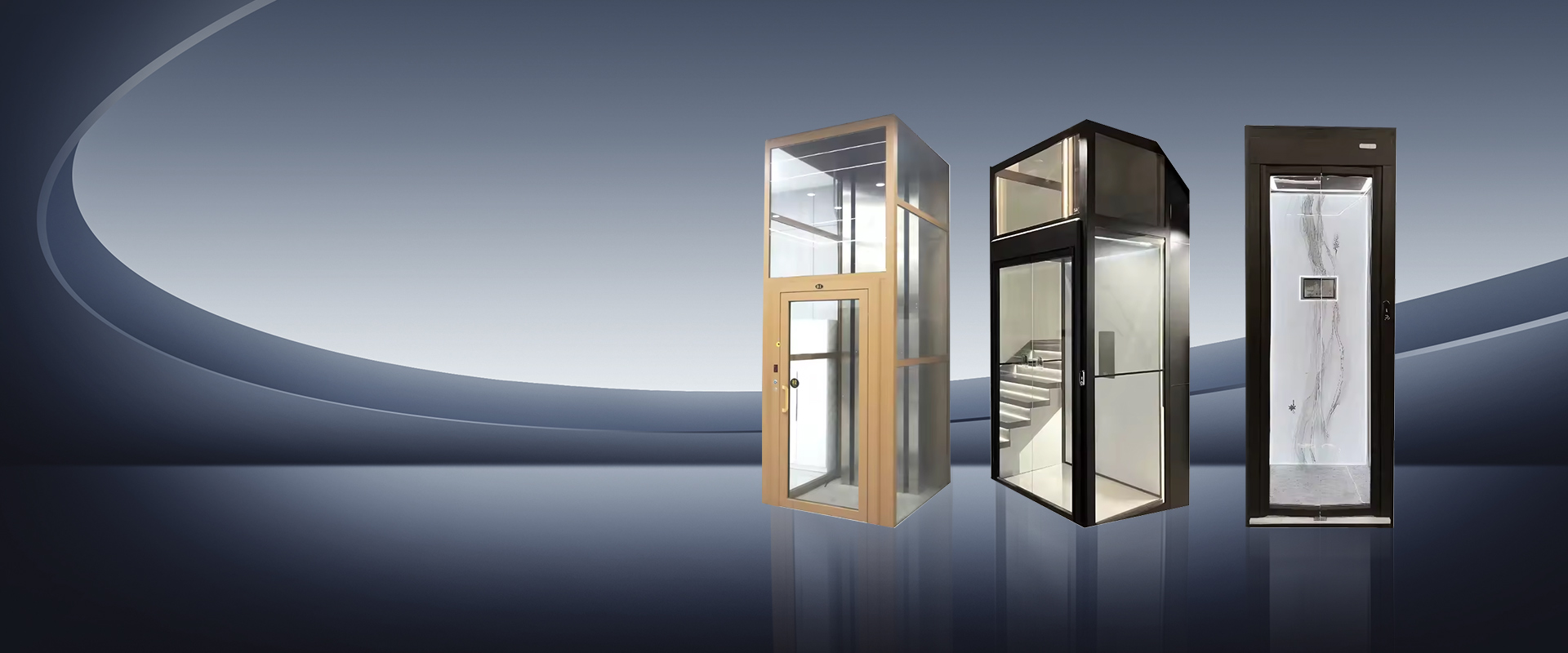
Interior Customization and Its Effect on Price
Homeowners often customize the elevator cabin because it is visible from the living space.
A standard stainless-steel cabin is usually easier to manufacture and maintain.
Glass can create a panoramic appearance but may increase material, structural, and installation requirements.
Wood-style or customized decorative panels can increase cabin costs.
Options may include:
LED ceiling lights
Spotlights
Ambient lighting
Decorative lighting
Options can include:
PVC
Rubber
Stone
Wood-style flooring
Customized materials
A clear quotation should separate standard finishes from optional upgrades.
How to Reduce Traction Gantry Home Elevator System Price
Cost control does not necessarily mean choosing the cheapest elevator.
Accurate site measurements reduce redesign and modification costs.
Do not automatically select a larger capacity than the building requires.
A standard cabin finish can reduce customization costs.
For a new house, planning the elevator at the architectural stage can reduce later structural work.
Compare the same scope:
Equipment
Installation
Shaft
Transportation
Electrical work
Commissioning
Inspection
Warranty
For B2B projects, direct communication with the manufacturer can simplify customization and technical coordination.
However, factory-direct pricing should be evaluated together with installation support, documentation, warranty, and spare-parts service.
How to Request a Traction Gantry Home Elevator System Price
For an accurate quotation, provide the manufacturer with detailed project information.
Country
Building type
Number of floors
Number of stops
Floor-to-floor height
Total travel height
Required capacity
Car size
Door size
Door type
Indoor or outdoor
Desired speed
Shaft dimensions
Pit depth
Headroom
Existing or new shaft
Structural conditions
Installation access
Stainless steel or glass
Standard or customized cabin
Lighting
Flooring
Handrails
Control panel
Providing these details allows the manufacturer to prepare a much more meaningful quotation.
How to Compare Two Elevator Quotations
Suppose Supplier A offers a lower equipment price and Supplier B offers a higher price.
The correct comparison should examine what each quotation contains.
Does the quotation include the traction machine, controller, gantry, car, doors, guide rails, counterweight, and safety components?
Is installation included?
Is the shaft included or excluded?
Are shipping and local transportation included?
Who provides the electrical preparation?
Is testing included?
What is covered under the warranty?
Are standard spare parts available?
Is technical support available after installation?
A lower initial number can represent a higher total project cost if major items are excluded.
Maintenance and Long-Term Cost
The purchase price is only the beginning of the elevator's lifecycle cost.
Maintenance can include:
Routine inspection
Door adjustment
Traction system inspection
Brake inspection
Electrical inspection
Safety device testing
Cleaning
Lubrication where applicable
Replacement of wearing components
Published residential elevator guides emphasize the importance of separating equipment cost from long-term maintenance and service costs when evaluating the total project budget.
A buyer should request information about:
Recommended service intervals
Warranty duration
Spare-parts availability
Service response
Maintenance contract
Emergency support
How to Use a Traction Gantry Home Elevator
A home elevator is simple to operate, but users should follow the manufacturer's instructions.
Wait for the elevator to stop completely and make sure the doors open normally.
Enter carefully and supervise children.
Press the desired floor button.
Remain inside the car and avoid interfering with doors or controls.
Never exceed the rated capacity.
Large objects should be positioned so that the load is distributed appropriately.
If the elevator stops unexpectedly, use the emergency alarm or communication system.
Passengers should not attempt to force open doors or climb out without professional assistance.
Common Problems
Possible reasons include:
Door not closed
Power interruption
Safety circuit activation
Emergency stop activation
Controller fault
A qualified technician should inspect the problem.
Possible causes include:
Obstruction
Door sensor activation
Door alignment
Mechanical wear
Control fault
Do not force the door.
Possible sources include:
Guide rail issues
Door components
Traction equipment
Loose mechanical parts
Installation alignment
Unusual noise should be inspected promptly.
Potential causes include sensor problems, controller settings, or mechanical conditions.
Professional service is required.
Safety systems may intentionally stop the elevator when an abnormal condition is detected.
Users should use the emergency system and wait for qualified personnel.
Frequently Asked Questions
There is no single global price. Published 2026 residential elevator references range broadly from approximately US$20,000 for simpler systems to US$100,000 or more for complex customized projects. A traction gantry system should be quoted according to capacity, stops, travel height, cabin, gantry, shaft, installation, and destination market.
Equipment-only pricing varies according to the complete configuration. Published traction home elevator references show equipment prices in the tens of thousands of US dollars for some 2–4-stop gearless traction configurations, but these figures should not be treated as a fixed price for every gantry system.
Not necessarily. Some quotations are equipment-only, while others include installation and commissioning.
Always ask the supplier to identify inclusions and exclusions.
Usually this depends on the supplier and project contract.
Shaft construction should be listed separately if it is not included.
There is no single factor for every project. Number of stops, travel height, capacity, cabin size, drive system, shaft construction, installation complexity, and customization can all affect the final price.
The answer depends on the comparison. A traction gantry system with a customized cabin and structural enclosure may cost more than a basic compact lift, while a simple traction configuration can overlap with other residential elevator price categories.
The correct comparison should use equivalent capacity, stops, finish, installation scope, and safety requirements.
Yes, it can. A larger cabin may require a larger gantry, shaft, doors, guide system, and traction configuration.
Usually, yes. More stops and greater travel height can require additional guide rails, landing doors, control components, wiring, and installation work.
It can. Glass cabins and enclosures may require additional materials, structural design, finishing, and installation work.
In many cases, it may be technically possible, but the building must first be surveyed.
Retrofit work can increase the total budget because structural modifications may be necessary.
Some traction gantry systems can be designed for outdoor applications.
Outdoor projects need appropriate weather protection, corrosion resistance, drainage, waterproofing, and structural engineering.
The answer depends on the specific model and local requirements.
Some residential elevator designs can reduce pit requirements, but buyers should not assume a particular pit depth without receiving the manufacturer's approved technical drawing.
Not necessarily. Some traction residential systems use compact machine-room-less arrangements, while other configurations may require dedicated equipment space. The final requirement depends on the selected system.
Provide the number of floors, stops, floor-to-floor height, capacity, car dimensions, shaft dimensions, door type, installation location, indoor/outdoor requirement, power supply, and desired interior finish.
Many manufacturers offer customization for car size, capacity, doors, finishes, control systems, structural arrangement, and other project requirements.
A useful quotation should clearly identify:
Elevator equipment
Gantry
Traction machine
Controller
Car
Doors
Guide rails
Safety components
Installation
Transportation
Shaft work
Electrical work
Testing
Commissioning
Warranty
Spare parts
Compare quotations with the same specifications and scope.
A factory price should not be evaluated without considering equipment configuration, quality control, documentation, warranty, technical support, and after-sales service.
It depends on the contract. Maintenance is often quoted separately from the initial equipment purchase.
The most effective approach is to define the project scope early, select appropriate capacity, confirm shaft dimensions before manufacturing, avoid unnecessary customization, compare complete quotations, and clarify installation and service responsibilities.
Conclusion
Traction Gantry Home Elevator System Price depends on far more than the elevator car or traction machine. The final budget is determined by the complete relationship between equipment specifications, building structure, installation conditions, customization, transportation, testing, and long-term maintenance.
For early planning, published 2026 residential elevator references demonstrate a broad market range, with simpler home elevator projects potentially starting around the tens of thousands of US dollars and complex customized installations reaching US$100,000 or more. Singapore references similarly show broad variation depending on equipment, stops, structural work, installation, and finishes.
For a Traction Gantry Home Elevator System specifically, the most important pricing variables include rated capacity, number of stops, travel height, car dimensions, traction machine, gantry structure, door configuration, shaft requirements, interior finishes, electrical work, and installation complexity.
The best purchasing strategy is therefore not to search for one universal price. Instead, buyers should prepare accurate project information and request an itemized quotation from the manufacturer. The quotation should clearly separate elevator equipment, structural work, installation, transportation, commissioning, compliance-related expenses, warranty, and maintenance.
For villas, self-built houses, duplex homes, multi-story residences, and renovation projects, a correctly engineered traction gantry home elevator can provide a customized residential transportation solution. By defining the technical requirements early and comparing complete project costs rather than equipment prices alone, homeowners, contractors, distributors, and developers can build a more realistic budget and reduce unexpected expenses during installation.
Situs web ini menggunakan cookie untuk memastikan Anda mendapatkan pengalaman terbaik di situs web kami.
 English
 ไทย
ไทย Tiếng Việt
 Filipino



 Telepon