

1. Introduction
A Traction-type Backpack Home Elevator Duplex is a compact Residential Elevator solution designed for duplex houses, villas, multi-level residences, and modern homes where convenient vertical transportation is required without sacrificing valuable living space. Combining a traction drive system with a backpack-style structural configuration, this type of home elevator can provide smooth vertical transportation between multiple residential floors while offering flexible installation possibilities.
For duplex homeowners, vertical mobility can become increasingly important as the building layout expands from one level to two or more floors. Stairs may be inconvenient for elderly family members, children, people carrying heavy objects, or anyone with temporary mobility limitations. A residential elevator can improve accessibility while also making everyday movement between floors more convenient.
The backpack configuration is particularly useful where conventional elevator layouts are difficult to integrate. Instead of relying on a traditional central shaft arrangement, the elevator structure can be positioned close to a wall or building edge depending on the architectural design. This allows the elevator to work with existing residential structures, including some renovation and remodeling projects.
The traction system uses an electric motor, traction sheave, ropes or belts, counterweight components, and a control system to move the elevator car. Compared with some hydraulic configurations, traction technology can provide efficient operation and precise stopping performance while being suitable for frequent residential use.
A Duplex Home Elevator is not simply a transportation device. It can become an integrated part of the building's architecture. With customized cabin dimensions, landing doors, finishes, lighting, control panels, and installation arrangements, homeowners can select a configuration that matches the interior or exterior style of the property.
When selecting a Traction-type Backpack Home Elevator Duplex, buyers should consider factors such as the number of floors, travel height, rated load, cabin size, available installation space, power supply, door configuration, safety requirements, climate conditions, and local elevator regulations.
The term Traction-type Backpack Home Elevator Duplex combines three important concepts: traction drive technology, backpack-style elevator construction, and duplex residential application.
A traction elevator moves the car through a motor-driven traction mechanism. The motor rotates a traction sheave, and the elevator ropes or equivalent traction elements transfer movement to the car and counterweight system.
This arrangement allows the elevator to move upward and downward with controlled acceleration and deceleration.
The backpack structure generally places the supporting guide and driving arrangement toward one side of the elevator car rather than surrounding the cabin with a conventional central shaft configuration.
This can provide greater flexibility when integrating the elevator into a residential building.
A duplex house normally has two main residential levels, although the same elevator concept can also be adapted for additional floors depending on the model and project requirements.
A duplex elevator can connect:
Ground floor and first floor
First floor and second floor
Multiple residential levels
Living areas and upper bedrooms
Indoor and selected exterior access points
The final configuration should always be determined according to the building structure and applicable elevator regulations.
The traction-type Backpack Elevator operates through coordinated mechanical, electrical, and control components.
When a passenger selects a destination floor, the control system receives the command and checks the operating conditions. Once the safety circuit confirms that the elevator can move, the traction motor starts.
The traction mechanism moves the elevator car along its guide system. Depending on the design, a counterweight or equivalent balancing arrangement helps reduce the amount of motor power required during movement.
The controller regulates:
Motor starting
Acceleration
Constant-speed travel
Deceleration
Leveling
Door operation
Safety monitoring
When the elevator approaches the destination floor, the controller reduces the speed and performs precise leveling. The doors can then open after the appropriate safety conditions are confirmed.
This controlled process provides a comfortable and predictable ride for residential users.
4. Typical Specifications
The exact specifications of a Traction-type Backpack Home Elevator Duplex should be customized according to the building and project requirements. The following table represents typical configuration parameters rather than universal fixed values.
Product Type | Traction-type Backpack Home Elevator |
Application | Duplex Houses, Villas, Residential Buildings |
Drive System | Electric Traction |
Structure | Backpack-type |
Floors | 2–4 Floors or Customized |
Rated Load | Approximately 250–450 kg or Customized |
Passenger Capacity | Approximately 2–5 Persons |
Speed | Residential Low-Speed Configuration |
Installation | Indoor or Selected Outdoor Applications |
Control | Microcomputer / Variable Frequency Control |
Door Type | Automatic or Manual Configuration |
Cabin | Customized Dimensions |
Guide Structure | Side-mounted Backpack Arrangement |
Power Supply | According to Local Electrical Standard |
Safety System | Multi-layer Safety Protection |
Cabin Material | Stainless Steel, Glass, Aluminum or Customized |
Lighting | LED or Customized |
Emergency Device | Emergency Lighting / Alarm / Backup Options |
Customization | Available According to Project |
Application | Duplex, Villa, Self-built House, Renovation |
Actual rated load, speed, shaft dimensions, pit requirements, overhead requirements, motor power, door dimensions, and other technical specifications must be confirmed with the elevator manufacturer before ordering.
5. Main Features
One of the most important advantages of the backpack configuration is its ability to adapt to space-limited residential environments.
Traditional elevator installations can require considerable architectural space. A backpack-type structure can be designed around the available building layout, potentially reducing the impact on usable residential space.
This makes it attractive for duplex homes where every square meter can be important.
The traction system provides controlled elevator movement through an electric motor and traction mechanism.
The system can offer:
Smooth starting
Controlled acceleration
Accurate leveling
Stable stopping
Efficient operation
Comfortable residential transportation
The specific performance depends on the selected motor, controller, load, speed, and elevator configuration.
A duplex home elevator may be installed in different locations depending on the building structure.
Possible installation locations include:
Staircase areas
Building corners
Existing shafts
Exterior walls
Balcony areas
Extensions
Entrance areas
Renovated residential spaces
A professional site survey should be performed before installation.
The cabin can be customized in terms of size, materials, colors, lighting, handrails, flooring, control panels, and other decorative elements.
Common materials include stainless steel, glass, aluminum, and combinations of different architectural finishes.
This allows the elevator to become visually compatible with modern, classic, minimalist, or luxury residential designs.
Residential elevators should incorporate multiple safety systems rather than relying on a single protective device.
Depending on the model, safety functions may include:
Door interlock
Overspeed protection
Emergency braking
Overload protection
Emergency stop
Emergency alarm
Door obstruction detection
Power failure protection
Automatic leveling
Emergency lighting
Backup lowering or rescue functions
The exact safety configuration varies by elevator model and local regulations.
6. Advantages of a Traction-type Backpack Home Elevator Duplex
A home elevator allows family members to move between floors without using stairs.
This can be especially useful for:
Elderly residents
Children
People with reduced mobility
People carrying luggage
People transporting groceries
Residents moving furniture or household items
Accessibility can become an important long-term consideration when designing a duplex home.
A compact elevator configuration can help reduce the amount of architectural space required for vertical transportation.
For small or medium-sized residential properties, this can make it easier to integrate an elevator without significantly changing the overall floor plan.
A duplex elevator can be considered during the design phase of a new building or added later as part of a renovation project.
For new construction, the architect can reserve the necessary space from the beginning.
For renovation projects, the elevator supplier can evaluate available space and determine whether an external or internal configuration is practical.
Traction technology can provide controlled movement between floors. With an appropriate controller and properly adjusted drive system, passengers can experience gradual acceleration and deceleration.
This is particularly important for residential applications where comfort is often more important than high-speed transportation.
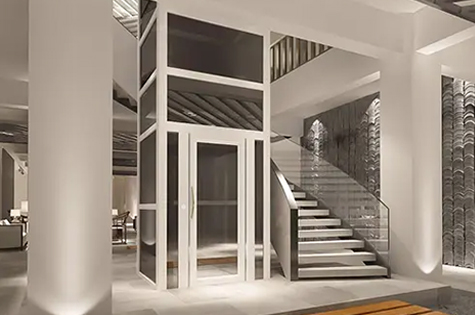
Modern home elevators can be designed as functional architectural features.
Glass panels can create a panoramic appearance, while stainless steel can provide a clean modern finish. Customized lighting can further integrate the elevator with the interior design.
7. Application Scenarios
The most direct application is a duplex residence.
A home elevator can connect the main living floor with bedrooms, offices, or recreational spaces located upstairs.
Instead of depending entirely on stairs, residents can use the elevator for convenient daily transportation.
Large villas often contain several floors and may have complex architectural layouts.
A traction-type backpack elevator can provide vertical transportation while being customized to match the villa's architectural appearance.
Self-built residential properties often have greater flexibility in structural planning.
The elevator can be incorporated into a reserved shaft or installed along a suitable wall or building extension, subject to structural assessment.
Older houses may not have been designed with an elevator.
A compact backpack configuration can be considered where the existing staircase, balcony, exterior wall, or other architectural space provides a suitable installation opportunity.
Duplex and villa homes frequently accommodate multiple generations.
An elevator can help older family members access upper floors more comfortably and can also make transporting household items easier.
An indoor elevator can be integrated into the building interior.
Typical locations include:
Staircase openings
Hallways
Living room corners
Entrance areas
Central residential spaces
Interior installation generally requires careful coordination with the floor structure and building layout.
Where indoor space is limited, some elevator configurations may be designed for outdoor installation.
An outdoor elevator requires appropriate protection against rain, humidity, temperature changes, corrosion, and other environmental conditions.
8. Installation Considerations
Before purchasing a Traction-type Backpack Home Elevator Duplex, a professional technical assessment is recommended.
Important dimensions include:
The vertical distance between floors determines the required travel height and guide structure.
The available wall or shaft width affects cabin size and equipment positioning.
Cabin depth and structural components must fit within the available installation area.
The space above the highest landing must meet the requirements of the selected elevator system.
Some residential elevator designs may reduce or eliminate conventional pit requirements, but this depends entirely on the specific elevator design and applicable regulations.
The power supply should match the motor, controller, and local electrical standards.
The building structure must be capable of supporting the elevator equipment and associated loads.
A qualified engineer or elevator professional should verify structural requirements before installation.
9. How to Use a Traction-type Backpack Home Elevator
Using a residential elevator is straightforward, but proper operating habits improve safety and service life.
Open the landing door only when the elevator is correctly positioned at the floor.
Enter the cabin without exceeding the rated capacity.
Press the button corresponding to the desired floor.
Avoid repeatedly pressing multiple buttons because the elevator controller is designed to process commands automatically.
Passengers should remain inside the cabin and avoid leaning against the doors.
Children should be supervised during elevator operation.
Allow the elevator to complete its deceleration and leveling sequence before opening the door.
After the door opens completely, confirm that the cabin floor and landing floor are properly aligned before stepping out.
10. Daily Maintenance
Regular maintenance is essential for reliable elevator operation.
Important inspection items include:
Door operation
Door interlocks
Traction components
Guide rails
Motor operation
Controller performance
Safety circuits
Emergency alarm
Lighting
Cabin controls
Leveling accuracy
Electrical connections
Lubrication where required
Maintenance intervals should follow the manufacturer's instructions and applicable local regulations.
Users should never attempt to repair traction machinery, safety circuits, brakes, or electrical control equipment themselves.
11. How to Choose the Right Duplex Home Elevator
Choosing the right elevator requires more than selecting a cabin style.
First determine how many floors need to be connected.
A two-floor duplex may require a different configuration from a three- or four-floor villa.
Consider the number of passengers and typical household loads.
Common residential configurations may support approximately 250–450 kg, but the correct rated load should be determined by the project.
The cabin should be large enough for the intended users while remaining compatible with the available building space.
Traction systems are suitable for many residential applications, but hydraulic and other technologies may be appropriate for different architectural or technical conditions.
Decide whether the elevator will be installed indoors, outdoors, in a shaft, beside a staircase, or in another location.
Door arrangement should match the floor layout.
Possible configurations can include single-side access or other customized arrangements depending on the elevator design.
Always evaluate the complete safety system, including door protection, emergency functions, overload protection, braking, and rescue functions.
For villas and duplex homes, appearance can be almost as important as mechanical performance.
Consider:
Cabin finish
Glass panels
Lighting
Flooring
Handrail
Control panel
Landing doors
Exterior structure
12. Traction Elevator vs. Hydraulic Home Elevator
Both traction and hydraulic technologies can be used for residential elevators, but their mechanical principles are different.
A traction elevator uses a motor and traction mechanism to move the elevator car. A hydraulic elevator uses hydraulic pressure to move a piston or hydraulic cylinder.
Efficient traction drive
Smooth movement
Compact modern configurations
Suitable for multiple residential floors
Precise leveling
Flexible control
Strong lifting capability
Flexible installation possibilities
Suitable for certain low-rise applications
Can work well in selected renovation projects
The best choice depends on building height, available space, desired performance, structural conditions, installation environment, and local requirements.
13. Common Problems and Solutions
Possible causes include:
Door not fully closed
Safety circuit activated
Power supply problem
Emergency stop activated
Controller fault
Users should first check whether the landing and cabin doors are completely closed.
If the problem continues, contact qualified maintenance personnel.
Do not attempt to force the doors open.
Press the emergency alarm if available and follow the manufacturer's emergency procedure.
Passengers should remain inside the cabin until qualified personnel arrive.
A door obstruction sensor may have detected an object.
Check whether an item or passenger is blocking the doorway.
Do not bypass the safety sensor.
Unusual sounds may indicate mechanical wear, guide system issues, door problems, or other equipment conditions.
The elevator should be inspected by qualified technicians.
If the cabin repeatedly stops noticeably above or below the landing floor, professional adjustment and inspection are required.
Do not continue normal operation if the leveling problem becomes significant.
14. Safety Recommendations
Safety should always be the highest priority when operating a residential elevator.
Passengers should:
Never exceed the rated load
Never jump inside the cabin
Never force elevator doors
Never interfere with safety sensors
Keep children supervised
Keep liquids away from electrical controls
Never enter the elevator shaft
Never attempt unauthorized repairs
Follow emergency instructions
Schedule professional maintenance
The elevator should only be operated after installation, commissioning, inspection, and acceptance procedures have been completed according to applicable requirements.
15. Energy Efficiency
Energy consumption is an important consideration for residential elevator buyers.
Unlike commercial elevators that may operate continuously throughout the day, a home elevator generally operates intermittently.
Energy efficiency can be influenced by:
Motor efficiency
Drive controller
Elevator load
Travel height
Number of trips
Standby power
Lighting
Door operation
Control strategy
Modern traction systems can be configured with efficient motor and control technologies to reduce unnecessary energy consumption.
However, actual energy consumption should be evaluated using the specific elevator's technical data rather than general assumptions.
16. Customization Options
A Traction-type Backpack Home Elevator Duplex can often be customized to meet different architectural requirements.
Options may include:
Stainless steel
Tempered glass
Aluminum
Decorative panels
Custom flooring
LED lighting
Handrails
Customized control panels
Depending on the manufacturer, customers may specify:
Elevator height
Cabin width
Cabin depth
Door dimensions
Landing arrangement
Installation position
Exterior enclosure
Project requirements may determine:
Rated load
Speed
Number of stops
Travel height
Motor configuration
Control system
Power supply
Customization should be finalized after technical evaluation rather than based solely on marketing specifications.
17. Why a Backpack Configuration Is Suitable for Duplex Homes
Duplex properties often have a distinctive architectural challenge: the elevator must provide vertical transportation without compromising the existing living areas.
A backpack configuration can address this challenge by positioning key structural components toward one side of the elevator.
This can help designers work around:
Staircases
Walls
Windows
Balconies
Narrow corridors
Existing floor plans
For renovation projects, this flexibility can be particularly valuable.
The final installation arrangement still depends on structural conditions and the dimensions of the selected elevator.
18. Buying Guide for a Traction-type Backpack Home Elevator Duplex
Before placing an order, buyers should prepare detailed project information.
Recommended information includes:
Number of floors
Floor-to-floor height
Total travel height
Available installation width
Available installation depth
Available overhead space
Pit conditions
Desired cabin dimensions
Rated load
Number of passengers
Indoor or outdoor installation
Door configuration
Local power supply
Building structure
Preferred cabin materials
Required safety functions
Providing these details allows the manufacturer to recommend a more suitable elevator configuration.
For custom projects, buyers should also request technical drawings before construction begins. This can prevent conflicts between the elevator dimensions and the building structure.
19. Manufacturer and Supplier Considerations
When selecting a home elevator manufacturer, price should not be the only consideration.
A reliable supplier should be able to provide:
Technical specifications
Installation drawings
Product configuration
Safety information
Customization options
Installation guidance
Maintenance recommendations
Spare parts support
Warranty information
After-sales service
For international projects, buyers should also confirm whether the elevator configuration complies with the relevant standards and regulations in the destination market.
20. Frequently Asked Questions
It is a residential elevator using an electric traction drive system combined with a backpack-style structural configuration. It is designed to provide vertical transportation in duplex houses, villas, and other multi-level residential buildings.
The number of floors depends on the elevator model, travel height, motor, guide structure, and local requirements. Many residential configurations can serve two to several floors.
Yes. Its compact structure and flexible installation arrangement make it suitable for many duplex and villa applications, provided the building conditions are appropriate.
The capacity depends on the selected model. Common residential configurations may support approximately 2–5 passengers, with rated loads often customized according to the project.
Yes. Depending on the manufacturer, cabin dimensions, rated load, travel height, doors, materials, lighting, finishes, and control configuration can be customized.
Potentially yes. Existing-house installation requires a professional assessment of structural conditions, available space, power supply, and local regulations.
Some configurations can be designed for outdoor installation. Outdoor applications require appropriate protection against weather and environmental exposure.
Some modern residential traction elevators can use machine-roomless or compact drive arrangements. Whether a separate machine room is required depends on the specific design.
Pit requirements depend on the specific elevator structure. Some residential elevator designs can minimize pit requirements, but buyers should confirm the actual requirements with the manufacturer.
A properly designed, installed, inspected, and maintained residential elevator can provide convenient transportation for different family members. Door protection, emergency systems, braking, overload protection, and other safety functions are important considerations.
Maintenance frequency should follow the manufacturer's recommendations and local regulations. Regular professional inspections help identify wear, electrical issues, door problems, and other potential faults.
Depending on the configuration, the elevator may include emergency lighting, alarm systems, backup power, automatic rescue, or other emergency functions. The exact functions should be confirmed before purchase.
Depending on the model, glass can be used for cabin panels or an exterior enclosure. Appropriate safety glass and structural design should be used.
The main difference is the structural arrangement. A backpack elevator places the supporting guide and related components toward one side of the cabin, which can provide additional layout flexibility.
Traction systems can be designed for efficient residential operation. Actual energy consumption depends on motor efficiency, load, travel height, number of trips, controller, lighting, and standby functions.
Yes, renovation is one potential application. However, the building should be evaluated before installation to determine whether the required structure and space are available.
Manufacturers normally need the number of floors, floor height, travel height, cabin size, rated load, installation location, door configuration, power supply, and available installation dimensions.
Yes, depending on the selected configuration. The controller and elevator structure can be designed for the required number of stops.
Normal operation is generally simple. Users select the destination floor and allow the automatic control system to manage acceleration, travel, deceleration, leveling, and door operation.
The most important factors include safety, building structure, available installation space, load capacity, number of floors, travel height, drive system, cabin dimensions, door configuration, local regulations, maintenance support, and total project cost.
21. Conclusion
The Traction-type Backpack Home Elevator Duplex provides a practical vertical transportation solution for duplex houses, villas, self-built homes, and selected renovation projects. Its combination of traction drive technology and backpack-style construction can provide smooth operation while offering greater flexibility for space-constrained residential environments.
For homeowners, the benefits extend beyond convenience. A residential elevator can improve accessibility, simplify movement between floors, support multi-generational living, and add long-term functionality to a property.
The correct elevator should always be selected according to actual building conditions rather than choosing a configuration based only on advertised specifications. Rated load, cabin size, travel height, installation dimensions, structural support, power supply, safety equipment, and local regulations all need to be considered.
For a duplex project, the ideal approach is to begin with a detailed site survey. After confirming the floor plan and installation conditions, the manufacturer can develop the appropriate elevator configuration and technical drawings.
A well-designed Traction-type Backpack Home Elevator Duplex can combine compact architecture, reliable traction technology, customized appearance, comfortable operation, and residential accessibility into one integrated home mobility solution. With professional installation and regular maintenance, it can become a valuable part of modern duplex and villa living.
Situs web ini menggunakan cookie untuk memastikan Anda mendapatkan pengalaman terbaik di situs web kami.
 English
 ไทย
ไทย Tiếng Việt
 Filipino



 Telepon